
Climate Innovation
The plant is the anchor. The opportunity extends beyond the plant.
Methane-reducing paddy cultivation, suitable residual biomass for soil use, and capture around gas upgrading are pathways to evaluate. Potential carbon-removal integration with participating land remains a research topic.
These are research and evaluation pathways, not current plant results. No GreenArc plant is operating.
A maturity ladder, not a promise.
- Operating
- Deploying
- Pilot
- Evaluating
- Research
The ladder describes possible stages. Our pathways remain at Evaluating or Research; a Pilot label requires evidence of a trial underway.
Alternate wetting and drying
Evaluating- Hypothesis
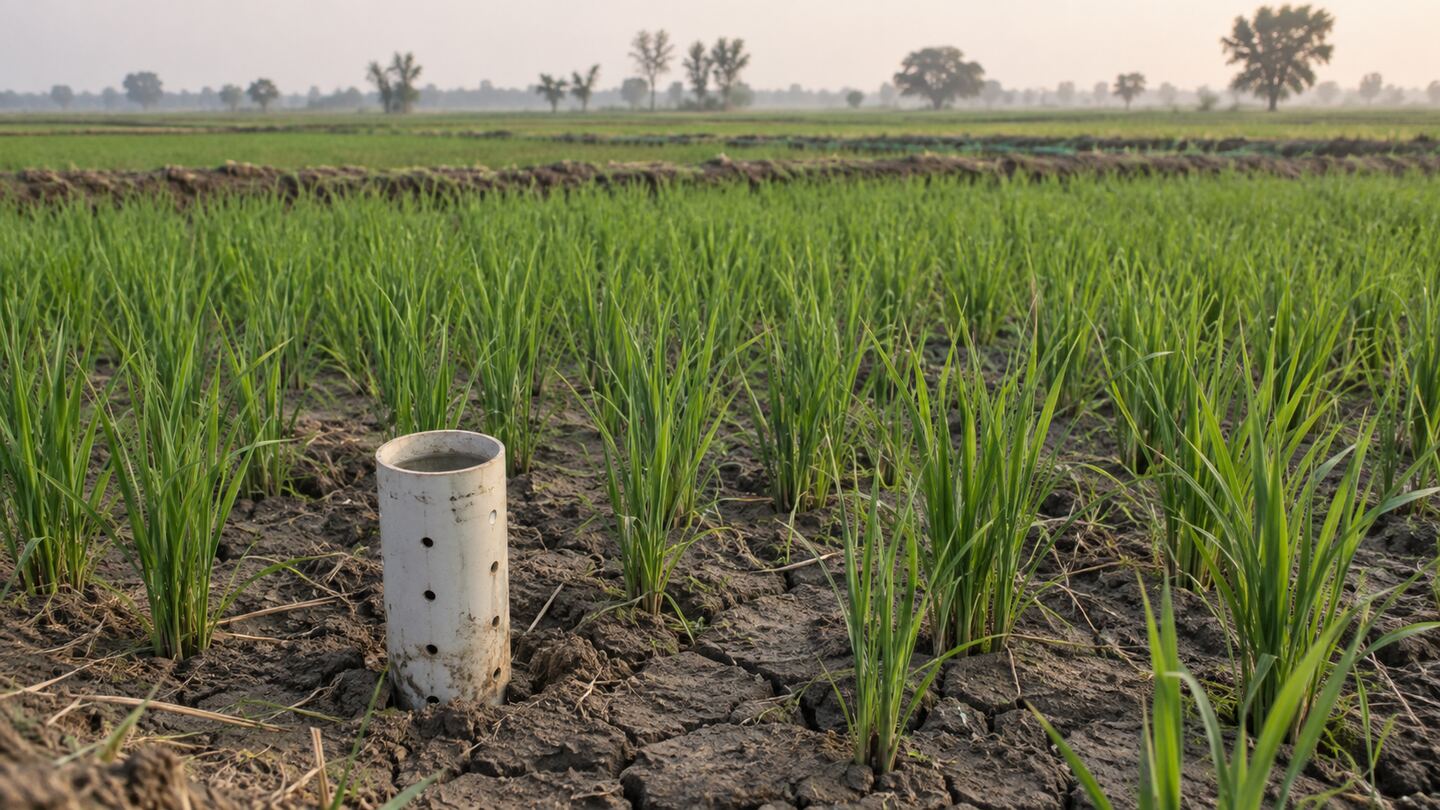
- Controlled drainage on paddy fields supplying straw could lower field methane. The inventory default is context, not a field measurement or a GreenArc result.
- Proposed pilot design
- Proposed paired plots comparing AWD with continuous flooding on the same farms in the same season, subject to farmer consent and irrigation control.
- Evidence required
- Irrigation-control records, field water-level verification, farmer training records, and measured or method-consistent methane estimates.
- MRV approach
- Measurement, reporting and verification would combine plot-level water monitoring with an established rice methodology. Inventory defaults would not be reported as pilot results.
- Stop criteria
- Stop if the water regime cannot be controlled or verified, yield loss is unacceptable to farmers, or no method can credibly measure the change.
- Carbon rights & double-counting
- Agree farmer consent and carbon ownership before any claim. Never double-count the change with avoided-burning claims.
Biochar
Evaluating- Hypothesis
- Separate questions guide evaluation: could biochar help digestion, and could char applied to mineral soils qualify as a removal? Laboratory food-waste results are a reason to test, not evidence for commercial paddy-straw digesters.
- Proposed pilot design
- Start with proposed bench tests against a control; then, if a plant is commissioned and a trial is approved, consider a slipstream trial. Keep any soil-application study separate.
- Evidence required
- Our own char production data, including temperature and carbon content; digester performance against a control; and soil-application records. Inventory persistence estimates are not a char-quality pass/fail test.
- MRV approach
- Removal claims require an applicable methodology, lifecycle accounting and verification. In-digester use is not a removal.
- Stop criteria
- Stop if no repeatable digestion benefit appears at bench or in any approved slipstream trial. Do not make a soil-removal claim without qualifying evidence.
- Carbon rights & double-counting
- Agree ownership before any claim. Count char once, either in process or in soil, without duplicate carbon claims.
Biogenic CO₂
Evaluating- Hypothesis
- Carbon dioxide separated during upgrading could be recovered for use or storage, or later methanated. Recovery performance and the energy and mass balance remain untested hypotheses.
- Proposed pilot design
- Propose a recoverable-tonnes study once upgrading technology is selected. Any measurement or recovery trial would depend on a commissioned plant and trial approval.
- Evidence required
- Measured recoverable quantity, purity and recovery performance, with methane losses counted in net accounting.
- MRV approach
- Metered capture and end-use or storage records, with methane losses included. Utilisation that re-releases carbon dioxide is not a removal.
- Stop criteria
- Stop if recoverable volume or purity is too low, or if no durable end use can be established.
- Carbon rights & double-counting
- Agree ownership and end-use accounting before any claim. Do not count the same captured stream as both utilisation and a durable removal.
Enhanced rock weathering
Research- Hypothesis
- Potential carbon-removal integration with participating land is a research topic. Field evidence in Indian rice systems is early, not yet peer-reviewed.
- Proposed pilot design
- Before proposing a field trial, screen rock specifications and safety, define a removal-measurement protocol, and seek participating farmers’ consent. Any trial would remain conditional on these checks.
- Evidence required
- Rock specification, heavy-metal checks, dust controls and removal measurement before any claim.
- MRV approach
- Define a baseline and a credible removal-measurement approach before a trial. Track rock application and field sampling; no removal claim without verification.
- Stop criteria
- Stop if the rock source fails safety checks or removal cannot be measured.
- Carbon rights & double-counting
- Agree farmer consent and carbon ownership before any claim. Check for overlapping land-based claims and count any verified removal only once.
Evidence before a carbon claim.
- No negative carbon-intensity claim until a baseline is defined and methane losses are measured.
- Silicon and nutrient recovery, including struvite and ammonia, are study topics, not claimed benefits.
- Any farmer carbon-sharing concept needs ownership, farmer-share and verification arrangements first.
Peer-reviewed research finds that methane leakage during digestion and biogas handling can largely erode the climate benefit of biogas systems. Net accounting therefore has to count methane losses.Basis
The methane-loss study covers wastewater biogas facilities, not agricultural-residue CBG. It supports a general accounting principle only.
Sources & boundaries
External evidence informs proposed tests. It does not establish GreenArc performance or credit eligibility.
- Intergovernmental Panel on Climate Change, 2019 Refinement to the 2006 IPCC Guidelines for National Greenhouse Gas Inventories, Vol. 4 Ch. 5 (Cropland), Table 5.12 notes, pp. 5.53–5.54, 2019.Accessed 5 October 2026.
- Intergovernmental Panel on Climate Change, 2019 Refinement, Vol. 4 Ch. 5, Table 5.12 (Updated), "Default CH4 emission scaling factors for water regimes", 2019.Accessed 5 October 2026.
- Intergovernmental Panel on Climate Change, 2019 Refinement, Vol. 4 Ch. 2 Appendix 4 (Biochar), Table 4Ap.2 and note 2, 2019.Accessed 5 October 2026.
- Intergovernmental Panel on Climate Change, 2019 Refinement, Vol. 4 Ch. 2 Appendix 4, Table 4Ap.2, 2019.Accessed 5 October 2026.
- Yang et al., "Enhancing Methane Production in Anaerobic Digestion of Food Waste Using Co-Pyrolysis Biochar Derived from Digestate and Rice Straw", Molecules (MDPI), 15 April 2025.Accessed 5 October 2026.
- International Energy Agency, "Outlook for biogas and biomethane: Prospects for organic growth", 2020, p.13.Accessed 5 October 2026.
- International Energy Agency, "Outlook for biogas and biomethane: Prospects for organic growth", 2020, p.13.Accessed 5 October 2026.
- Li et al., "Methane leakage thresholds for net climate benefits of wastewater biogas recovery", Nature Sustainability (Springer Nature), 27 April 2026.Accessed 5 October 2026.